
In modern life, rest has become synonymous with stopping physically—collapsing onto the couch, scrolling through your phone, streaming something familiar in the background. It feels like relief. It looks like downtime.
And yet, you emerge still feeling depleted, foggy, and strangely overwhelmed.
We have greater access to “rest” than ever before, yet we feel increasingly burned out. Not because we aren’t taking breaks—but because what we call rest is often the very thing preventing recovery.
Why Scrolling Is Not Real Rest
You pick up your phone for a “quick break.” Twenty minutes later, you’ve consumed dozens of fragments—messages, headlines, images, videos. Your physical body may be still, but your mind is sprinting.
Digital engagement keeps the brain in a state of continuous micro-stimulation.
Each swipe, notification, or novel piece of content activates dopaminergic pathways—the brain’s reward system associated with seeking and anticipation.
Rather than satisfying you, this creates a loop of craving more input.
When this happens, the brain remains activated and alert, cortisol levels don’t fully drop and the body doesn’t fully exhale.
Here’s why:
1. Cognitive Load Never Lessens
True rest requires a reduction in cognitive demand. Digital consumption does the opposite—it floods the brain with information, forcing constant processing, filtering, and decision-making.
2. The Nervous System Stays Activated
Even low-level stimulation keeps cortisol slightly elevated. Over time, this prevents the body from entering parasympathetic dominance—the “rest and digest” state essential for recovery.
3. Attention Becomes Fractured
Rapid switching between apps and content trains the brain toward distraction. This reduces mental clarity, hinders decision making and increases feelings of overwhelm.
4. Sensory Overload Accumulates
Light, sound, and motion from screens overstimulate the visual and auditory systems, contributing to fatigue rather than alleviating it.
5. Sleep Quality Declines
Exposure to blue light suppresses melatonin production, disrupting circadian rhythms and impairing deep sleep—the foundation of true restoration.
The Science of Rest and Nervous System Recovery
True rest is not simply the absence of activity. It is a measurable physiological state.
Scientifically, it’s marked by increased heart rate variability (HRV)—a key indicator of nervous system resilience and recovery. Psychologically, it brings clarity, steadiness, and a sense of grounded energy.
When real rest occurs, the body shifts into parasympathetic nervous system dominance. Heart rate slows. Breathing deepens. Muscles release tension. Hormonal balance begins to restore.
In the brain, activity transitions toward alpha and theta waves, linked to calm awareness, creativity, and healing.
Perhaps most importantly, the Default Mode Network (DMN) activates. This network is responsible for internal processing—memory integration, emotional regulation, and self-reflection. It’s what allows experiences to settle and make sense, rather than accumulate as noise.
Without access to this state, the brain remains in constant input mode—consuming, reacting, but never integrating.

What Real Rest Actually Looks and Feels Like
Real rest doesn’t just pause life, it restores your capacity to live it fully.
You don’t need to opt out of modern life to experience real rest, but you do need to approach it differently.
Redefine what rest means
Ask yourself honestly: does this restore me, or just distract me?
Create device-free rituals
Protect moments in your day—morning, meals, evenings—where your mind is not being pulled outward.
Engage in low-stimulation practices
Time in nature, mindful movement, breathwork, journaling, or simple stillness allows the brain to shift into restorative states.
Support your circadian rhythm
Reduce screen exposure in the evening and prioritise sleep as the foundation of recovery.
Schedule rest intentionally
Rest is not leftover time. It is a biological necessity that deserves structure and protection. Schedule it in as you would any other task in your calendar.
The Aro Ha Philosophy: Rest as a Practice
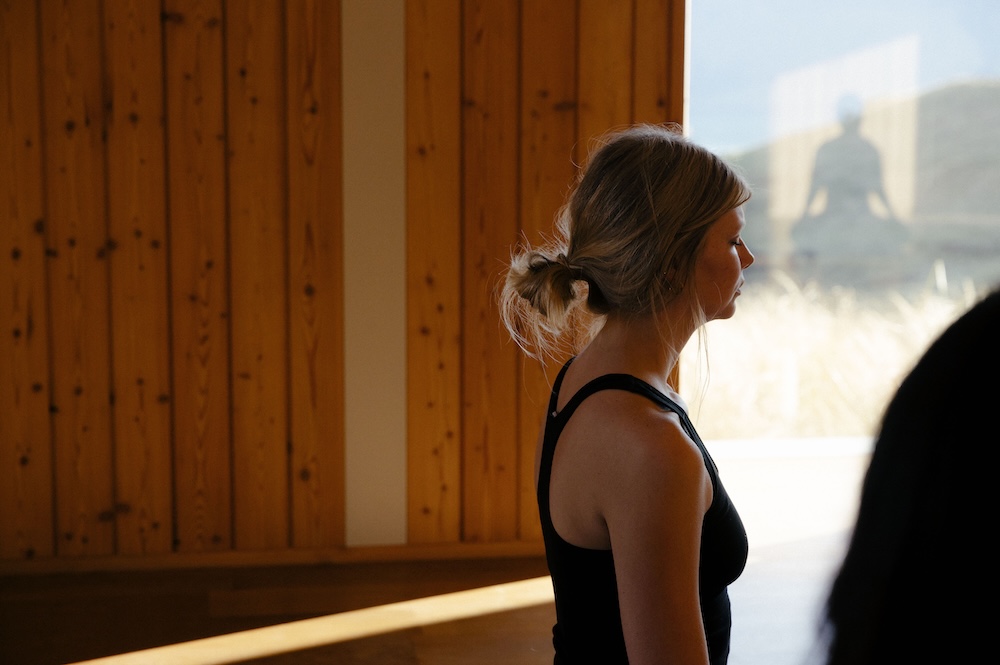
At Aro Ha, rest is not passive—it’s a practice. It’s woven into every experience, from mindful movement and nourishing food to time in nature and intentional stillness.
Because when you truly rest, you don’t just recover—you reconnect.
You return to a state where clarity replaces overwhelm, energy replaces fatigue, and presence replaces distraction.
And perhaps most importantly, you remember what it feels like to be fully alive—without needing or wanting to escape into a screen.
The invitation is simple, but profound: Less stimulation. More restoration.
Are you ready to prioritise true rest? Join us for a 5 or 7 day reset. Check dates and availability here.