
Prefer to Listen?
Cognitive Longevity Audio
Longevity has become one of the most talked-about topics in wellness—often measured in years, metrics, and external optimisation. Biological age. Telomere length. VO2 max. The numbers that promise to quantify how well we're aging.
But there's a quieter question beneath it all:
What is the quality of the mind that lives inside those years?
You can have the cardiovascular system of someone a decade younger and still feel mentally heavy, scattered, unable to focus. This is the territory of cognitive longevity; the emerging science of keeping your brain not just alive, but vital as you age.
The Fog Isn't Normal. It's a Signal.
That thickness behind your eyes. The afternoon where your thoughts move through honey. The creeping sense that your mind isn't quite as quick as it used to be.
You've probably blamed it on stress. Or sleep. Or simply getting older.
But here's what neuroscience now understands: your brain isn't betraying you. It's responding to what you've been giving it—or not giving it.
The brain is not a fixed organ that inevitably declines. It's a dynamic system that either grows or shrinks based on the inputs it receives. There is no maintenance mode. No coasting. No "holding steady."
This isn't pessimism. It's biology. And once you understand it, it becomes the most hopeful thing you'll encounter today.
The Molecule at the Centre of Cognitive Longevity
At the heart of your brain's capacity to stay sharp, adapt, and regenerate is a protein called BDNF—Brain-Derived Neurotrophic Factor.
Scientists call it "fertiliser for the brain." BDNF is what allows neurons to strengthen existing connections, form new ones, and repair damage. It's the molecular signature of a brain that's growing rather than declining.
High BDNF correlates with mental clarity, emotional resilience, faster learning, and protection against neurodegenerative conditions.
Low BDNF correlates with fog, fatigue, anxiety, depression, and accelerated cognitive aging.
The research is unambiguous: BDNF levels are not fixed by genetics or age. They respond, dramatically, to how we live.
Which raises the question that matters: What are you doing, daily, to produce more of it?
Why Your Brain Feels Old (Even If Your Body Doesn't)
Neuroscience suggests that much of our daily thinking is highly repetitive. We move through familiar routines, solve similar problems, and cycle through the same thoughts, perspectives, and mental patterns day after day.
This is efficient. The brain conserves energy by automating what it can predict. But efficiency is not the same as vitality. The brain thrives on difference.
Neuroplasticity; the brain's ability to reorganise itself and form new neural pathways—depends on novelty, challenge, and what researchers call "enriched environments." Without these inputs, the pathways that keep us sharp begin to weaken. The fog rolls in. And we mistake entropy for inevitability.
Cognitive longevity isn't about doing more. It's about doing differently.
It's about introducing the kind of gentle disruption that wakes the brain up—that forces it to adapt, integrate, and grow. Not through strain or complexity, but through intentional variation in how we move, breathe, rest, and pay attention.
The Practices That Actually Move the Needle
Over 12 years and 8,000+ guests, we've refined a methodology at Aro Ha that bundles nearly every major, human-tested lever for increasing BDNF; and by extension, for supporting cognitive longevity across the lifespan.
This wasn't by accident. It was by design. And the science bears it out.

Movement in Nature
A single session of vigorous aerobic exercise increases serum BDNF by 32% versus sedentary controls. Meta-analyses of randomised trials show that both acute exercise and sustained training programs significantly elevate BDNF; with effect sizes of 1.20 for single sessions and 0.68 for long-term programs.
But it's not just movement that matters. It's where you move.
Forest-bathing research shows that multi-day immersion in natural environments increases NK cell activity, reduces cortisol, and shifts brain activity away from regions associated with rumination and depression. Nature adds something that treadmills cannot.
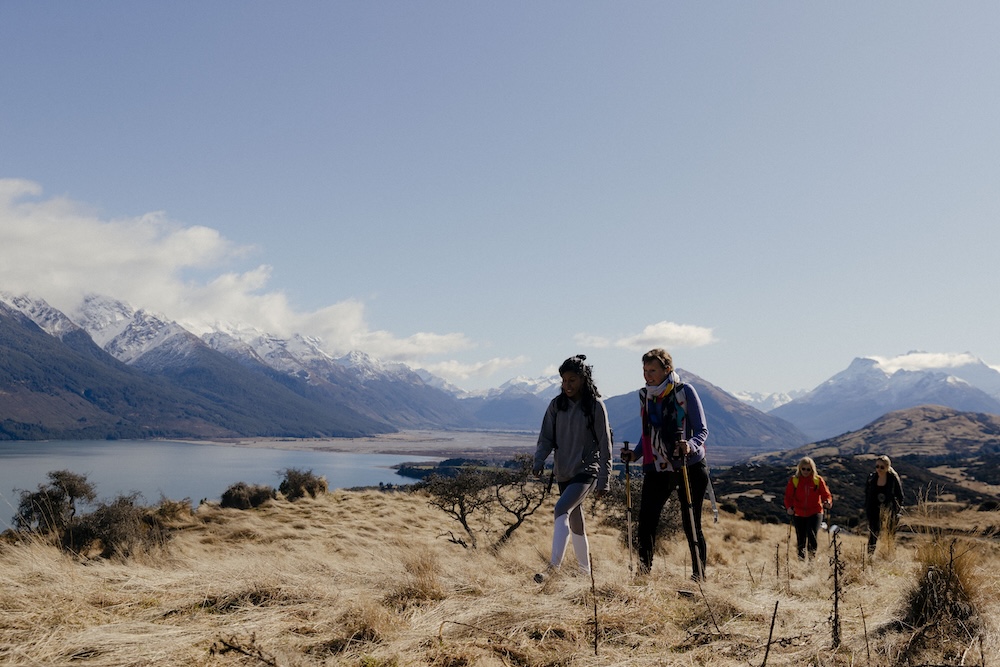
At Aro Ha, guests are invited to hike 12-17km daily through alpine wilderness; snow-capped peaks, ancient forests, glacial lakes. The body works. The brain wakes up. This isn't punishment. It's neurogenesis with a view.
Mindfulness-Based Practices
Mindfulness interventions produce significant BDNF elevation, with a pooled effect size of 0.72 across controlled trials. Both pure meditation protocols and movement-plus-mindfulness combinations show meaningful increases in this key neuroplasticity marker.
But perhaps more importantly for cognitive longevity, mindfulness directly targets the repetitive thought loops that accelerate mental aging. Rumination—the habit of cycling through the same worries, regrets, and projections—is associated with reduced BDNF and increased inflammation.
Mindfulness interrupts the loop. It introduces space where there was only reaction.
At Aro Ha, guests meditate daily using a simple mantra practice. They walk in silence through trails that were once Māori trading routes. They spend an entire day without speaking—not as deprivation, but as gift.
The nervous system learns a different way to be. The brain remembers how to grow.

Breathwork
Slow, diaphragmatic, HRV-coherent breathing shifts autonomic tone in ways that support the neuroplastic environment BDNF needs to function. Exercise-plus-mindfulness interventions that include breath practices show BDNF increases comparable to pure meditation protocols.
Breathwork also trains something essential for cognitive longevity: the capacity to regulate your own nervous system. This is agency at the most fundamental level—the ability to shift from reactivity to response, from fog to clarity, through nothing more than how you breathe.
At Aro Ha, we've developed a progressive breathwork arc that builds across the week; from diaphragmatic foundations to alternate-nostril breathing to heart coherence practices to a peak "Breath of Life" session. Each stage prepares the nervous system for the next.
By the end, guests don't just understand breath intellectually. They've built a new baseline.
Fasting and Anti-Inflammatory Nutrition
In animal models, intermittent fasting robustly increases BDNF expression in the hippocampus and cortex—the regions most essential for memory, learning, and cognitive flexibility. The mechanisms involve improved insulin sensitivity, reduced inflammation, and activation of cellular cleanup pathways.
In humans, fasting-mimicking diets improve the metabolic and inflammatory profiles that correlate with higher BDNF. We don't yet have perfect human trials isolating fasting's BDNF effects, but the mechanistic picture is compelling.
Aro Ha invites its guests into silence along with a low-calorie reset day. Guests are surprised by how clear they feel; not depleted, but strangely alert. The brain, freed from the work of constant digestion, tunes its attention upward.
Throughout the week, our award-winning culinary team serves nutrient-dense, plant-based cuisine designed to reduce inflammation and support metabolic flexibility. No alcohol. No processed foods. No blood sugar rollercoasters.
Not deprivation. Cellular renewal.
Sleep Architecture
Sleep is when the brain consolidates memory, clears metabolic waste, and repairs itself. Chronically poor sleep is associated with lower BDNF and impaired neuroplasticity. Correcting sleep doesn't spike BDNF directly, but it creates the conditions where everything else can work.
At Aro Ha, we don't just encourage good sleep, we engineer it.
Guests can wake at 6am and are free to sleep before 9pm. Nightly yin yoga and breathwork serve as the cue that tells the body it's time to wind down. No streetlights or traffic mean the rooms are dark and quiet.
There are no screens, no notifications, no decisions to make.
Within the first three days, many guests report deeper rest, and their wearable data proves it.
An Integrated System, Not Isolated Hacks
Here's what matters: these practices don't work in isolation. They work because they stack.
Movement primes the brain for neuroplasticity. Mindfulness directs that plasticity toward adaptive patterns. Breathwork regulates the nervous system so the brain can move from survival mode to growth mode. Fasting clears the metabolic noise. Sleep consolidates the gains.
Each practice amplifies the others. This is the Aro Ha methodology; not a menu of wellness options, but an integrated system designed to trigger transformation at the deepest biological level.
Cognitive longevity isn't built through supplements or brain games or hoping for the best. It's built through stacking inputs so your brain: grows.

The Result
Guests arrive foggy, depleted, heavy.
They leave having reduced their biological age by up to 2 years in 7 days. HRV improved 9.2%. Resting heart rate down 7.5 bpm. Blood pressure reduced 8.8%.
But the number that matters most isn't on a chart. It's in their words:
"The experience lifted the fog in my brain and everything in life felt easier and simpler when I came home.” ~ Sam Hain
One month after leaving Aro Ha, guests report a 41% improvement in feeling calm and peaceful. A 37% increase in energy. A 44% improvement in perceived health compared to the previous year.
This isn't retreat euphoria that fades on the flight home. This is cognitive longevity made tangible.
Start This Week
You don't need to travel to New Zealand to begin.
Access our BDNF Activation Protocol alongside six more accessible and transformational longevity practices in our free 7-Day Longevity Challenge — designed to remind you of what real vitality feels like in your own body, in your own life.
Begin the free 7-Day Longevity Challenge
If you'd rather join us on retreat and experience the ultimate shift, we're ready to welcome you.
The fog lifts. The clarity returns.
But only if you change the inputs.
