
There's a particular kind of tired that doesn't have a name yet. It isn't the tired that sleep fixes — you've tried that. It isn't the tired that a long weekend resolves — you've tried that too, and were checking email by Sunday afternoon anyway. It's the tired of someone who is, by every external measure, doing fine. Showing up. Delivering. Holding the people around them together. And yet somewhere in the last six months, the version of you that used to feel like yourself quietly left the room.
You didn't notice it happen, because it didn't happen. Not as an event. It accumulated — in the hundreds of small decisions you made instead of the one big one you've been avoiding, in the dinners you stayed present for after a day that had already used up your presence, in the rest you kept deferring because something else always, reasonably, came first.
This is The Slow Drift. It is not burnout, at least not in the clinical sense most people picture — the dramatic collapse, the breaking point, the inability to get out of bed. It is subtler than that, and more common, and in some ways more dangerous precisely because it's so easy to keep functioning through it. By June, a lot of high-functioning people are running an impressive simulation of themselves. The simulation works. It just isn't them.
What The Slow Drift Actually Is
The Slow Drift is the gradual depletion of energy, joy, and identity that builds across months of decisions, demands, and deferred rest — distinct from acute burnout because it doesn't announce itself. It shows up as a quiet erosion of vitality rather than a crisis, which is exactly why it's so often missed until it's been running, unaddressed, for half a year.
There's a reason this becomes legible specifically in June. January gives people a clean narrative — a fresh page, a resolution, a sense of agency over the year ahead. By mid-year, the resolution has met reality. The promises you made to yourself in January about protecting your evenings, training properly, being more present — most of them quietly didn't survive contact with an actual six months of work and family and obligation. The gap between the intention and the outcome isn't a failure of willpower. It's information. It's telling you something about what the last six months actually cost.
The Hidden Cost of Decision Fatigue
Every decision you make draws on the same finite cognitive resource, regardless of how trivial or significant the decision is. This is decision fatigue, and it doesn't reset overnight — it compounds across a quarter, across a year, in a way most people never account for because each individual decision feels too small to matter.
By the time a high-functioning professional reaches a Tuesday evening, they've usually made hundreds of decisions already — which email to answer first, how to phrase the difficult message, whether to push back in the meeting, what to make for dinner, whether tonight is the night to finally have the conversation they've been avoiding. None of these decisions are dramatic on their own. But the research on decision fatigue is clear that capacity, once spent, doesn't simply replenish with willpower. It needs genuine rest — the kind where no decisions are required at all, not even small ones — to actually recover.
This is also why so many high performers default to the same restaurant, wear a version of the same outfit, or eat the same lunch on repeat. It isn't a lack of imagination. It's a quiet, intelligent strategy to protect decision-making capacity for the choices that actually matter — and an early sign of just how thin that capacity has become.
Chronic Availability and the Body's Stress Ledger
There's a difference between working hard and never being fully off. The first is demanding. The second changes your physiology. Chronic availability — the always-reachable, always-half-listening state that defines most senior roles — keeps the nervous system in a low-grade activated state for months at a time, even when nothing acutely stressful is happening.
This is the territory of allostatic load: the cumulative wear on the body that comes not from one major stressor, but from a nervous system that never fully downregulates. Unlike acute stress, which has a clear beginning and end, allostatic load builds in the background of an otherwise normal life. Heart rate variability — a well-established marker of stress resilience — tends to decline under sustained, low-grade activation. Sleep architecture shifts. The body, in effect, keeps a ledger of every quarter spent reachable, and that ledger doesn't clear itself with a weekend.
The Emotional Labour of Holding Others Together
There's a specific exhaustion that comes from being the steady one — the person colleagues come to when something's falling apart, the parent who has to stay regulated when everyone else in the house isn't, the friend whose calm is relied upon precisely because it's reliable. This emotional labour rarely appears on any list of a person's responsibilities, which makes it almost impossible to budget for or protect against.
It costs real capacity. Regulating other people's emotional states while suppressing or postponing your own draws on the same resources as decision fatigue and chronic stress — and because it looks like strength from the outside, it rarely gets named as a cost at all. By mid-year, people who have spent six months holding everyone else together often find they have very little left to hold themselves.
When Willpower Replaces Rest
Somewhere in the middle of the year, a substitution tends to happen without anyone noticing: willpower starts standing in for rest. Instead of recovering, you push. Instead of stopping, you find another half-degree of discipline to apply. It works, for a while — willpower is genuinely effective at getting a tired person through one more difficult day.
But willpower and rest are not interchangeable, and treating them as if they are is one of the quiet mechanisms of The Slow Drift. Rest restores capacity. Willpower spends it. A person running on willpower can look, from the outside, indistinguishable from a person who is genuinely well — right up until the moment the willpower runs out, which is usually less dramatic and more sustained than people expect: not a breakdown, just a slow, persistent dimming.
Why Joy Goes Offline First
Of everything The Slow Drift takes, joy tends to go first — quietly, and almost without protest. This makes a certain physiological sense. Under sustained low-grade stress, the nervous system prioritises function over feeling. The capacity to get things done is, in many ways, more metabolically efficient to preserve than the capacity to feel delight, curiosity, or vitality. So the delight goes first, and the function carries on, which is exactly why so many people don't notice The Slow Drift until someone close to them points out that they haven't seemed like themselves in months.
This is, in a sense, the clearest definition of what's actually being lost. Burnout in the clinical sense is usually about exhaustion and inability to function. The Slow Drift is subtler and arguably costs more: full function, with the aliveness quietly switched off underneath it.
Recovery Without Stopping Everything
The honest question underneath all of this isn't “how do I avoid burning out” — most high-functioning people have already absorbed that advice and built lives that, on paper, account for it. The real question is how to recover from six months of accumulated load without dismantling the life that produced it. Nobody wants to quit the job, leave the family, or burn the career down to feel like themselves again. They want their nervous system back, intact, without the demolition.
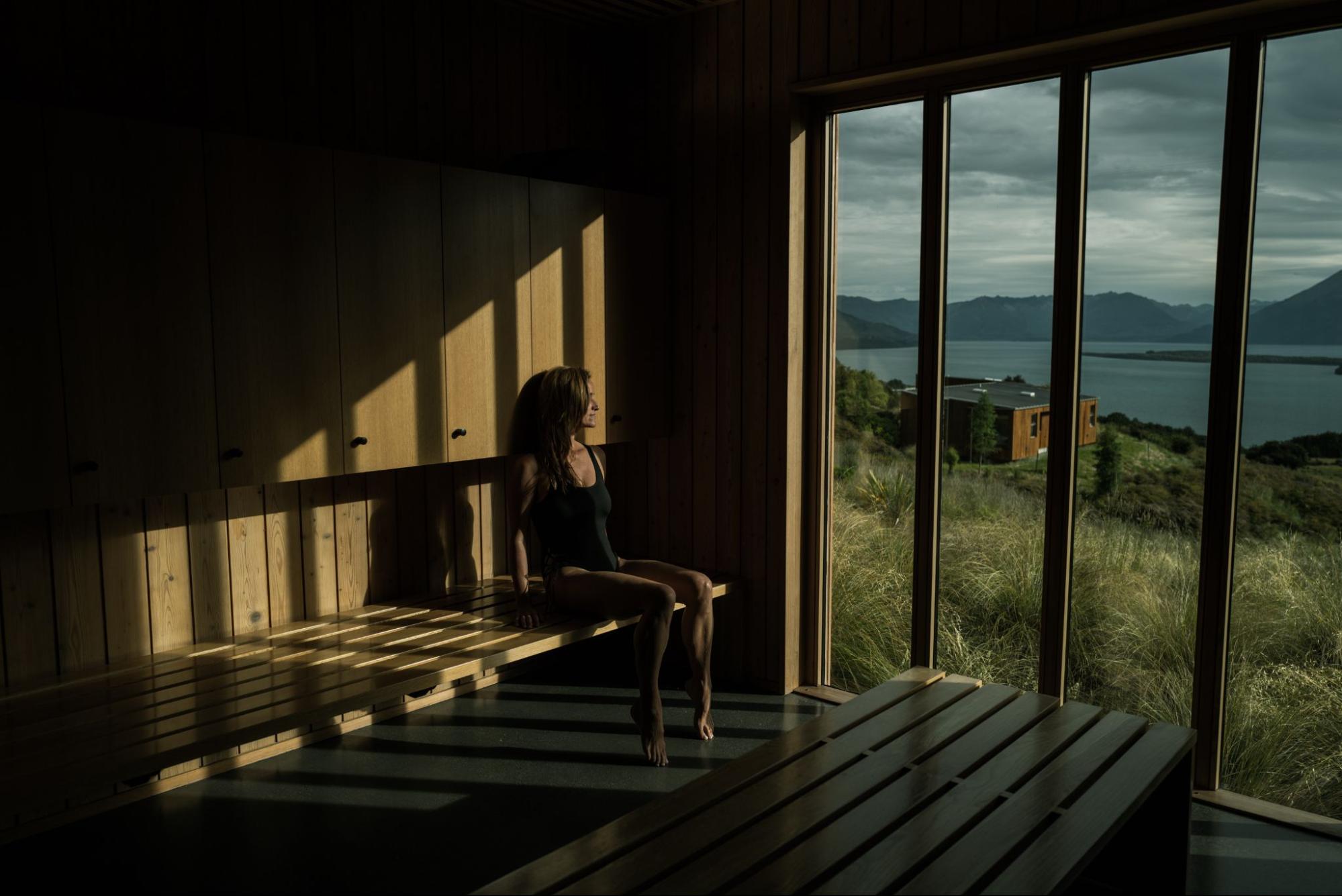
This is the specific problem Aro Hā was built to address. The programme runs in the sub-alpine wilderness above Lake Wakatipu, in Glenorchy, New Zealand, and it isn't a hotel with wellness add-ons or a yoga holiday — it's a deliberately sequenced intervention. Guests make no decisions. There's no mobile reception on the property. Meals are served, movement is structured, massage is included every day, and the entire architecture of daily life — the thing that's usually depleting decision-making capacity hundreds of times a day — is simply removed for seven days.
The results are tracked, not assumed. Across the Signature programme, guests have shown heart rate variability — the biomarker for stress resilience — up 9.2% on average, sleep quality improved 8.2%, and biological age reduced by up to 2.16 years in seven days, measured using TruAge testing. One month after returning home, guests report tiredness down 38% and energy up 37%. These aren't abstractions. They're what a nervous system looks like when it's finally allowed to stop running the ledger.
This is the surrender model, and it's a deliberate philosophy rather than a luxury flourish: the internal landscape needs support before any external change can hold. You can't decision-fatigue your way out of decision fatigue. The nervous system needs the demands actually removed — not managed, not optimised, removed — before recovery becomes possible.
A Note From Someone Who's Been
Nazanin Boniadi, the actress and human rights activist, spent over a year in New Zealand filming The Lord of the Rings: The Rings of Power — work that comes with exactly the kind of constant visibility and output this article has been describing. Reflecting on her time at Aro Hā, she described what the retreat's setting did for her:
"Surrounded by mountains, unplugged from phones and laptops, it became a place where I could hear my own thoughts again."
— Nazanin Boniadi, Actor & Activist
It's a modest line, but worth sitting with. Boniadi's work depends on a constant stream of input — scripts, schedules, attention. What she came away with wasn't a better view. It was quiet. That distinction tends to matter more, the busier a life gets.
As we embark on the final chapter of the year, this is your invitation to check in
As we embark on the final chapter of the year, this is your invitation to check in
There's a particular honesty available through the mid point of the year that January doesn't offer. You're past the resolutions. By now, you know what the first half actually demanded of you — not what you planned for, what actually happened. If the answer is more than you'd like to admit, that's not a failure of discipline. It's simply accurate information about where you are. Aro Ha's Signature 7-day programme has a small number of Spring dates remaining - with a maximum of twenty guests per retreat, by design. The dates tend to fill as the year goes on, partly because the people who most need a mid-year reset are also the people most likely to keep deferring the decision to book it. You don't need to wait for a clearer sign than the one you're already getting.